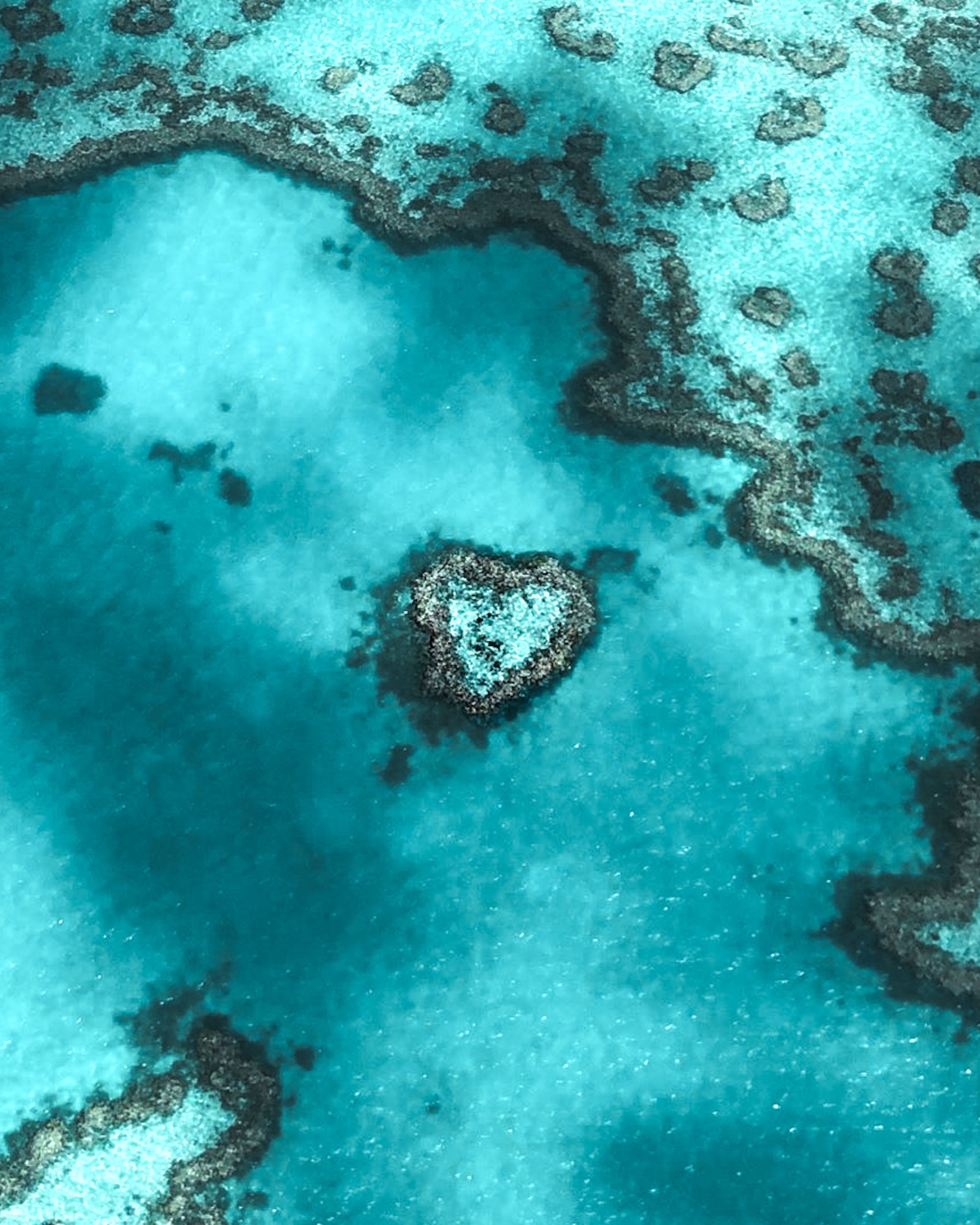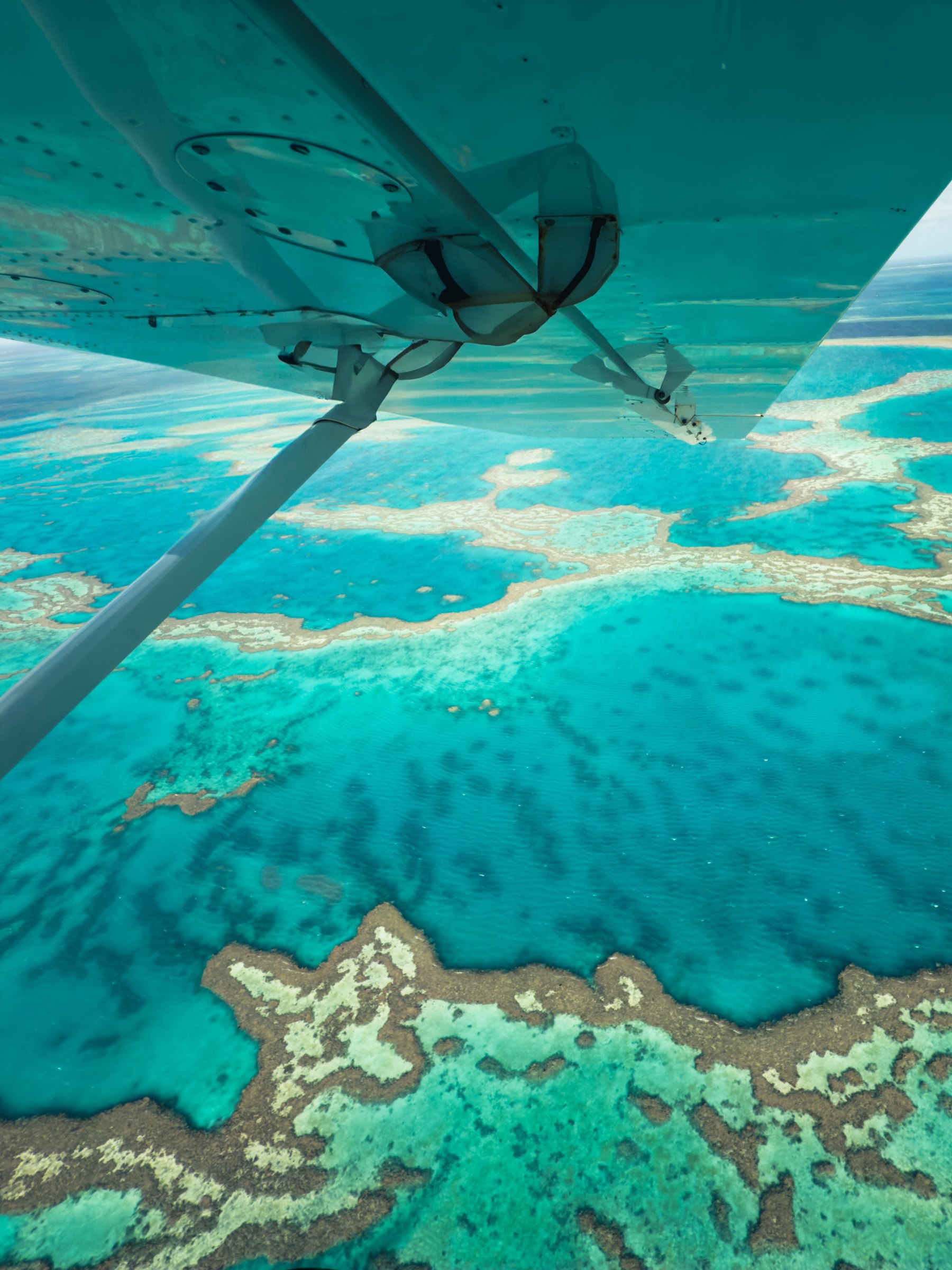
Ningaloo is a fringing reef along the desert coast of Western Australia, often only metres from the sand. That is what makes it special: calm lagoons, clear water, and whale sharks just beyond the reef in autumn. Here are 14 sites around Exmouth and Coral Bay on one map.
Where are the best snorkel and dive sites on Ningaloo Reef?
They cluster around two towns. From Exmouth, the beaches of Cape Range National Park sit about 40 km away on the west side of the cape, and boats run out to the reef, the Muiron Islands and the Navy Pier. Further south, Coral Bay is a tiny town where the reef starts at the water's edge. The Ningaloo Coast became World Heritage in 2011 and stretches for more than 300 km.
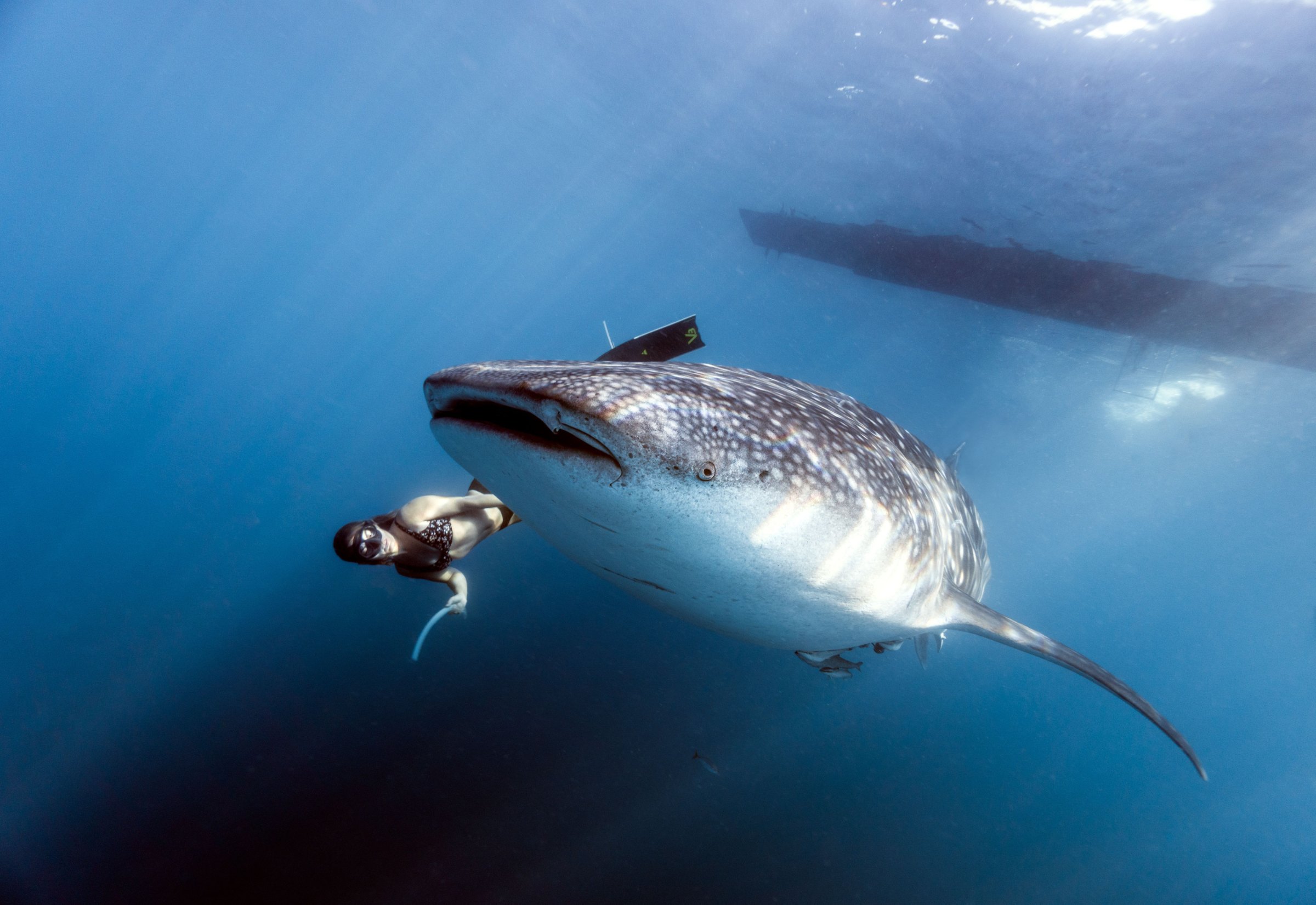
- Whale shark swim, Ningaloo ReefBoat · beginner · Mar–Jul Licensed tours drop snorkellers beside the world's biggest fish.
- Manta rays, Coral BayBoat · beginner Reef manta rays, seen here all year round.
- Turquoise Bay (the Bay)Shore · beginner Sand and coral bommies in a calm sanctuary zone.
- Turquoise Bay Drift SnorkelShore · intermediate A current carries you north over dense coral gardens.
- Oyster StacksShore · intermediate · high tide Rocky ledges and fish only metres from shore.
- LakesideShore · intermediate Big bommies with turtles, rays and reef sharks.
- Navy Pier, ExmouthTour · beginner A working navy pier, max 15 m, with groper and nudibranchs.
- Muiron IslandsBoat · intermediate Soft corals, swim-throughs, turtles and sharks.
- Lighthouse Bay (Blizzard Ridge)Boat · intermediate A coral ridge on sand in 12–15 m, with sea snakes.
- The LabyrinthBoat · intermediate A reef dive known for its turtle cleaning station.
- Bills Bay, Coral BayShore · beginner Sheltered coral gardens a short swim off the beach.
- Five Fingers ReefShore · beginner Five reef fingers south of town, by 4WD or a walk.
- Oyster Bridge (Bateman Sanctuary Zone)4WD · beginner A rock arm sheltering a small, fish-filled lagoon.
- Bundegi Sanctuary ZoneKayak · beginner · high tide Shallow moorings on the gulf side of the cape.
Is swimming with whale sharks worth it?
Yes. It is one of the great wildlife encounters anywhere. From about March to July, whale sharks feed along the outer edge of Ningaloo, and licensed boats from Exmouth and Coral Bay use spotter planes to find them. When one is found, the crew drops a small group in ahead of the shark (1), and you snorkel alongside as it glides past, mouth open, feeding on plankton. Some stay into August or later.
The rules are strict. Stay at least 3 metres from the head or body and 4 metres from the tail, never touch a shark, and no flash photos. Sightings are frequent but not certain, so ask what your operator offers if none is found.
Where can you snorkel from shore in Cape Range?
Turquoise Bay (3) is the easiest start: a calm bay of sand and scattered coral right off a white beach. Lakeside (6) is a quieter site with big bommies about 100 metres out, between the shore markers and the yellow buoys, where turtles, rays and reef sharks are common. Oyster Stacks (5) has rocky ledges thick with fish, but go only at high tide (1.2 m or more) so you don't damage the coral, and wear reef shoes for the sharp oyster shells. Across the cape, Bundegi (14) is a shallow kayak-and-snorkel trip.
Can you snorkel at Turquoise Bay?
Yes, and it is one of the best snorkels in Australia. Turquoise Bay sits inside a sanctuary zone of Ningaloo Marine Park, so look and take nothing. The famous Drift Snorkel (4) starts at the southern end: walk south from the Drift carpark, swim out, and let the current carry you north over the coral. Get out well before the sandbar, where the current gets stronger.
The drift is not for weak swimmers. Rangers do not regularly patrol the beaches, so read the current from the sand, never snorkel alone, and follow the park's advice: if in doubt, don't go out.
What are the best dives at Exmouth?
Exmouth's best-known dive is the Navy Pier (7), a working Navy facility dived only with a licensed operator, max 15 metres, with giant Queensland groper and nudibranchs. Boats also run to Lighthouse Bay (9), The Labyrinth (10) and the Muiron Islands (8), with swim-throughs and turtles. Add whale sharks for a great dive week.
Where do you snorkel at Coral Bay?
Coral Bay is tiny, but the reef starts at the beach. Bills Bay (11), at the end of Robinson Street, has sheltered coral gardens about 3 metres deep; watch out for glass-bottom boats. Five Fingers Reef (12), about 4.5 km south, is shallow and calm on good days, and Oyster Bridge (13) to the north needs a 4WD. Boat tours run to the manta rays (2) all year.
When is the best time to snorkel Ningaloo?
Ningaloo is one of the few places in Australia where you can snorkel well in almost any month, and there are no box jellyfish worries like the far north. Each season brings a different animal: whale sharks from about March to July, humpback whales from about July to November, with in-water humpback tours at Coral Bay from July to October, and nesting turtles on the beaches from about November to April. Manta rays are around all year.
The water is warmest in summer and cooler in winter, when a wetsuit helps. Wind is the main thing to watch: it can pick up quickly and make the drift snorkels and boat crossings rough. Go early, when the water is flatter, the light is better and the beaches are quieter before 9 am. Check the forecast, and if it looks rough, pick another spot.
One more Ningaloo rule: the current at the drift sites can be strong. Stay close to shore, swim with a buddy, and use a float or snorkel vest if you are not a strong swimmer.
For more, see the Western Australia guide, our guide to ocean safety in Australia and Uluru and the Red Centre.
Facts checked October 2026. Rules, fees and conditions change, so check with the operator, park or lifeguard before you go.