Aboriginal and Torres Strait Islander peoples have cared for Australia for more than 60,000 years, and many are glad to share their Country. A few cultural basics and some clear rules, from sacred sites to whales, make the difference between a tourist and a good guest.
What do Country and caring for Country actually mean?
Visitors soon hear the word Country, and it means far more than land. Aboriginal peoples use it for the lands, waterways and seas they are connected to, and it also takes in law, place, custom, language, spiritual belief, cultural practice, family and identity. Country is something people belong to, not something they own.
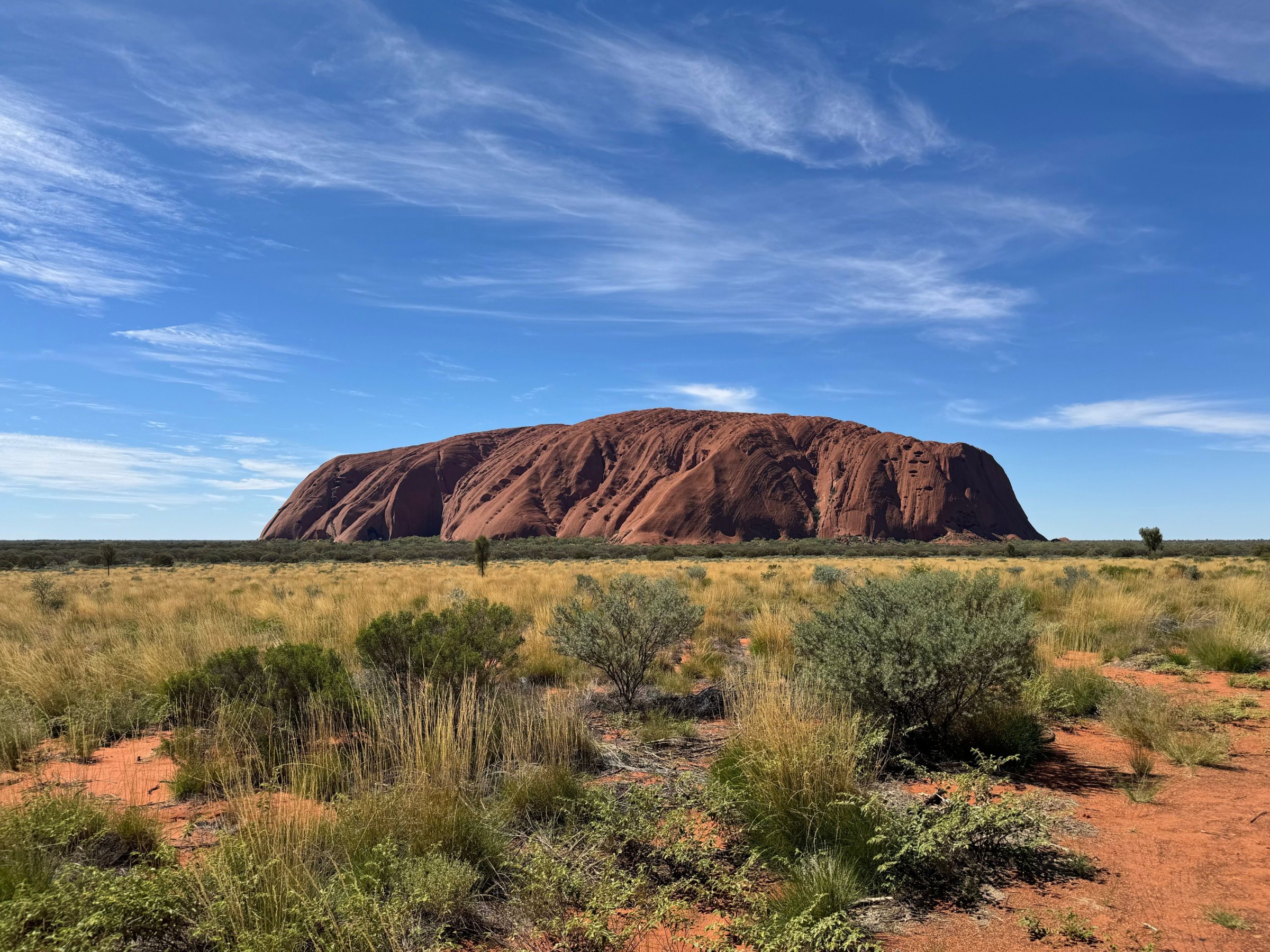
Caring for Country means looking after that land, water and culture together. At Uluru, Anangu call their law, stories and spirituality Tjukurpa, which shapes daily life and is part of both the land and the people.
For you as a guest, both ideas come down to the same thing: be patient, be curious, and leave places better than you found them.
Why does First Nations history matter to a visitor?
Aboriginal and Torres Strait Islander peoples are the oldest living cultures on Earth, with hundreds of distinct nations and languages. British colonisation from 1788 brought dispossession, violence and disease, and later policies removed many children from their families. Those children are known as the Stolen Generations.
Recognition has come slowly. In 1992 the High Court's Mabo decision rejected the idea that Australia had belonged to no one, and in 2008 the Prime Minister made a formal National Apology to the Stolen Generations in Federal Parliament.
You do not need to become a historian. Knowing this background helps you understand why land, language and sacred places mean so much here, and why the past still shapes life today. The Cultural Centre at Uluru in the Northern Territory is a good place to start.
How should you behave at Uluru or another sacred site?
Many places in Australia are sacred sites, from parts of Uluru to rock art shelters, waterholes and ceremonial grounds. Many are still used and cared for today. Treat them the way you would treat any church or temple.
- Stay on marked tracks. At Uluru-Kata Tjuta, staying on paths and off boulders keeps you out of sacred areas.
- Do not photograph sensitive sites. At Uluru they are marked on maps and signs, and Anangu ask for wide, distant shots of the north-east face only.
- Ask before photographing people. Always ask Anangu, and anyone else, for permission first.
- No drones. Drones are banned in Uluru-Kata Tjuta National Park under federal law, and penalties apply to anyone flying one there.
- Never touch rock art, and stay out of restricted areas.
Is it illegal to take rocks or sand from Uluru?
Yes. In national parks, removing rocks, sand, plants or cultural objects is prohibited, and Aboriginal heritage laws protect artefacts across the country. At Uluru-Kata Tjuta, a federally managed park, these rules are enforced, and using park images for commercial purposes also needs a permit.
There is also a cultural reason. For Anangu, Uluru and Kata Tjuta were shaped by creation ancestors whose stories live in every feature of the land. The park has long received rocks mailed back by visitors, often with letters of apology.
The easiest rule: take photos, leave every rock and grain of sand where it is.
Do you need a permit to visit Aboriginal land?
Often, yes. Much of Central Australia is Aboriginal freehold land under the Aboriginal Land Rights (Northern Territory) Act 1976. It is treated as private land, and the Central Land Council says most visitors need a written permit to enter.
- Public roads are fine. You can drive through a community and visit its store or art centre.
- Transit permits are free. Some non-public roads, such as the Mereenie Loop, need a transit permit or tour pass.
- Allow time. Entry permits to communities take at least a week, as traditional owners are consulted.
- Respect closures, including for Sorry Business after a death.
What is the difference between a Welcome and an Acknowledgement?
A Welcome to Country is given by Traditional Owners, or people they authorise, at the start of an event. It can include song, dance, a smoking ceremony or a speech, and welcomes visitors to their land.
An Acknowledgement of Country can be given by anyone, at the start of a meeting, speech or tour. It shows respect for Traditional Owners and their continuing connection to Country, and has no set wording. You may hear one on tours in Queensland, at events in Western Australia or on flights.
The simplest response is to listen quietly and take it seriously. It is a welcome, not a formality.
Many of Australia's best reefs sit inside marine parks with their own rules on fishing and collecting, and many are also sea Country. Read more in our guide to where the ocean is protected, and why it matters after the mass coral bleaching.
How close can you get to whales, turtles and other wildlife?
Australia's marine animals are protected, and many distances are set in federal and state law. These are the key rules to know:
| Animal | Rule | Status |
|---|---|---|
| Whales (boats) | 100 m (110 yd) | Law |
| Whales (jet skis) | 300 m (330 yd) | Law |
| Whale mothers with calves | No approach | Law |
| White whales, such as Migaloo | 500 m (550 yd) | Law in Qld and NSW |
| Nesting turtles at Mon Repos | Ranger tours only | Park rule |
| Drones at Uluru-Kata Tjuta | Banned | Federal law |
Around whales, boats must also slow down inside a 300 m caution zone, with no approach at all to a mother and calf. At Mon Repos, only handheld torches up to 100 lumens are allowed, and only with the guide's permission.
Never touch, feed or chase wildlife. If an animal changes its behaviour because of you, you are too close. To report a sick, injured or stranded turtle, dolphin or whale in Queensland, call 1300 130 372 (option 1). Our wildlife guide has more on where to see each species.
How do you pronounce Aboriginal place names correctly?
Many place names come from Aboriginal languages, and some are spelt in their own way. At Uluru, Anangu write Uluṟu and Kata Tjuṯa.
- Underlined letters (ṟ, ṯ): mark a sound made with the tip of the tongue curled back. In Pitjantjatjara, Uluṟu is said "OO-loo-roo", with the stress on the first syllable.
- Tj: sounds close to the "ch" in "church", so Kata Tjuṯa is said "KAH-ta CHOO-ta."
- Ask locally. Pronunciation differs between languages: listen to guides.
You will not be judged for an accent. Making the effort is a sign of respect people notice.
Should you say "Aboriginal", "Indigenous" or "First Nations"?
In Australia, Aboriginal and Torres Strait Islander peoples are two distinct groups, so name both. Indigenous Australians covers both together, and many people prefer First Nations, but preferences vary, so ask. Avoid "Aborigine" and acronyms such as ATSI, and use a nation's own name, such as Anangu, where you know it.
How can you support First Nations businesses and artists?
Aboriginal art is one of the world's great living art traditions, and also one of the most copied. Many cheap souvenirs in "Aboriginal style" are not made by First Nations artists at all. If you buy art, check the seller is listed on the Indigenous Art Code members register, which promotes fair, ethical trade with artists.
The most useful thing you can do is spend where it stays in community:
- Buy from community art centres and galleries that work directly with artists.
- Book tours with Aboriginal-owned operators, ideally ones that share culture with permission and context.
- Buy art and products made by First Nations artists rather than imported copies.
- Learn on Country. Ranger-guided walks and cultural centres, such as the one at Uluru-Kata Tjuta, share Anangu stories, bush foods and Tjukurpa in their own words, and many cost little or nothing. Some tours include a Welcome to Country.
At Uluru, Traditional Owners put it simply: "This is Anangu land and you are welcome." Visitors are asked to listen carefully, respect the knowledge they receive, and share what they learn. It is a good summary of everything above, wherever you go in Australia.
Facts checked October 2026. Cultural guidance follows AIATSIS, Reconciliation Australia and Parks Australia; permit rules follow the Central Land Council. Rules and closures can change, so check posted signs and official sources before you go.
- AIATSIS: Australia's First Peoples
- AIATSIS: Map of Indigenous Australia and the meaning of Country
- Reconciliation Australia: Welcome to Country and Acknowledgement of Country
- Parks Australia: Anangu culture at Uluru-Kata Tjuta
- Parks Australia: Respecting culture at Uluru-Kata Tjuta
- Parks Australia: Photography and drones at Uluru-Kata Tjuta
- Central Land Council: Permits for Aboriginal land
- Indigenous Art Code: Ethical trade in First Nations art