Australia lives at the beach. Surf clubs have guarded its sand for more than a century, and the coast still has every kind of wave: gentle rollers where children take their first lesson, and reef slabs that only a few hundred people on Earth can ride. This guide lists 32 breaks in New South Wales, Queensland, Victoria and Western Australia, colour-coded by level, so you know which is which.
When is the surf season in Australia?
Australia has surf all year; it just moves around the coast. From about March to September, deep lows in the Southern Ocean send powerful groundswell onto the south and west coasts, and Victoria's Surf Coast and Margaret River come alive. From about December to May, tropical cyclones in the Coral Sea send swell onto the points of south-east Queensland and northern New South Wales: Snapper Rocks, Burleigh and Noosa. In summer the southern coasts are often smaller and friendlier; the east coast picks up swell from several directions all year.
That simple rule decides almost everything. A beginner in July should look for sheltered beaches; an expert in January should head for the Queensland points. In the lists below, green breaks suit beginners, orange ones intermediate surfers, and red ones experts only.
Where to surf in New South Wales
New South Wales has the widest range. Sydney alone has dozens of beach and reef breaks, from Cronulla to Palm Beach, that work in most swells. The north coast, from Crescent Head to Byron Bay, has the long right-hand points where generations of Australians learned to ride a wave.
- Bondi: North endBeginnerYear-round Small, soft waves; surf schools.
- TamaramaExpertsYear-round A small, rippy bay with heavy shorebreak.
- MaroubraIntermediateYear-round A consistent beach; the first National Surfing Reserve.
- Cronulla BeachBeginnerYear-round Gentle beach waves for learners.
- Shark IslandExpertsAutumn–winter A heavy reef slab off Cronulla.
- Manly BeachBeginnerYear-round A long beach break; surf lessons.
- FreshwaterIntermediateYear-round Beach and point waves next to Manly.
- North NarrabeenExpertsAutumn–winter A fast, crowded left by the lagoon.
- Crescent HeadIntermediateAutumn–winter A legendary slow right; longboards.
- Angourie PointExpertsAutumn–winter Long, powerful rides over boulders.
- Lennox HeadExpertsAutumn–winter A powerful right point over a boulder bottom.
- Byron Bay: The PassIntermediateYear-round A long right point; packed in holidays.
- Byron Bay: WategosBeginnerYear-round Slow, full waves; longboards.
Watching is half the fun. On a big autumn swell, the headland above Lennox Head (11) is one of the best free shows on the coast, and when Shark Island (5) breaks, photographers crowd the rocks. Just stay out of the water: these waves break over shallow reef and boulders with enormous force, and even the shorebreak can knock grown adults off their feet.
Where to surf in Queensland
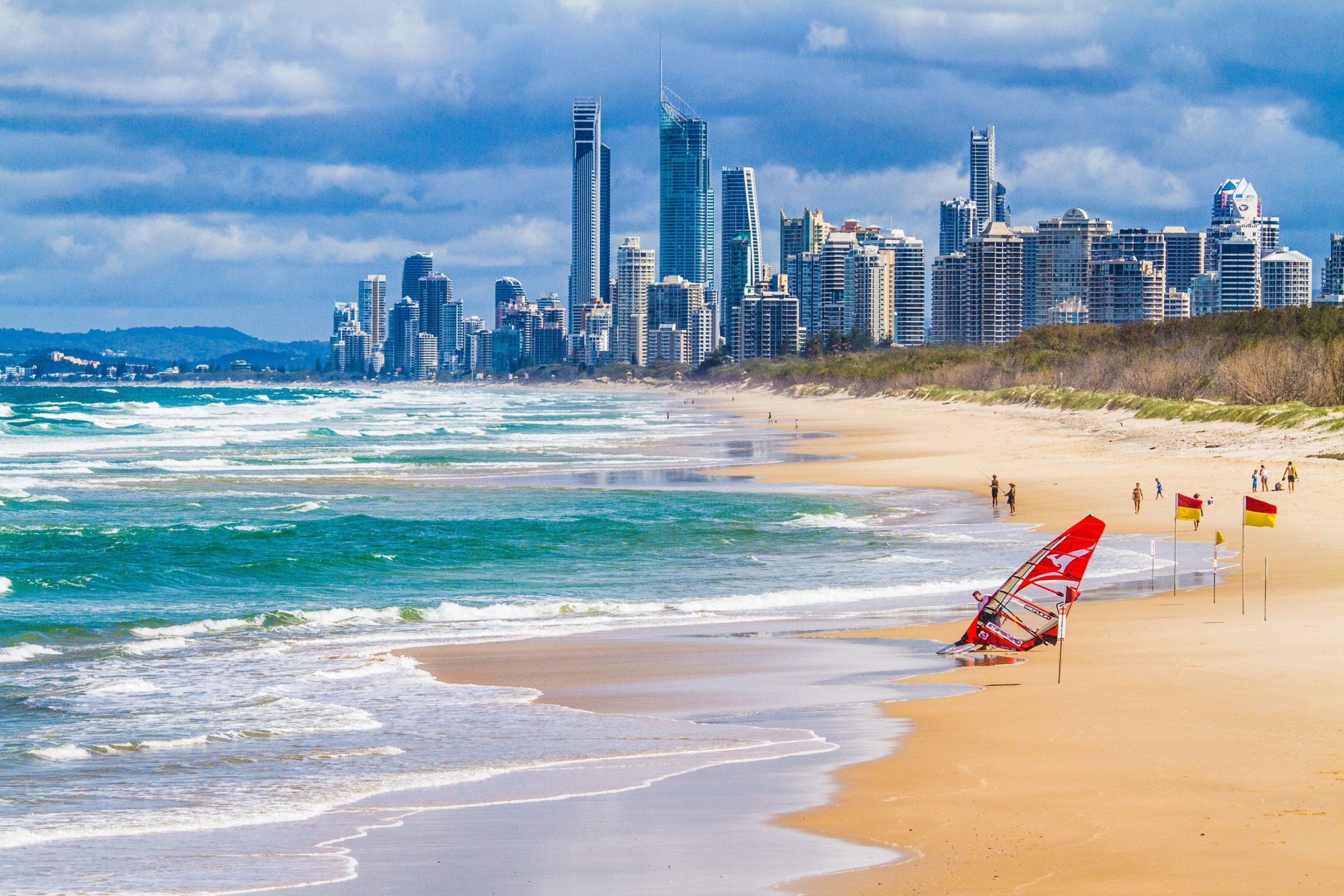
Queensland's surf is in the south-east. The Gold Coast's Superbank, a 2 km sandbank built up by sand pumped north from the Tweed River, runs from Snapper Rocks to Kirra, and the points of Noosa wrap around the national park.
- Snapper RocksExpertsSummer (Dec–May) Start of the Superbank; a world tour stop.
- Rainbow BayIntermediateSummer A softer section of the Superbank.
- GreenmountIntermediateSummer A fun, very crowded point section.
- KirraExpertsSummer The famous barrel at the end of the Superbank.
- Currumbin AlleyBeginnerYear-round Gentle waves by the creek mouth; surf schools.
- Burleigh HeadsExpertsSummer A hollow right point in cyclone swell.
- Noosa: First PointBeginnerSummer (Dec–May) A mellow, waist-high longboard wave.
- Noosa: JohnsonsIntermediateSummer Friendly, with a faster take-off.
- Noosa: Tea Tree BayIntermediateSummer A national park point wave.
- Noosa: Granite BayExpertsSummer The outer point; reached on foot through the park.
Contest season · April and May
The world tour comes to Australia each autumn. In 2026 the Championship Tour opened at Bells Beach (1–11 April), moved to Margaret River (17–27 April) and finished its Australian leg at Snapper Rocks (2–12 May). Watching from the beach or cliffs is free, but expect crowds and busy car parks on finals days. Check the World Surf League schedule before you go.
Where to surf in Victoria and Western Australia
Victoria's Surf Coast is cold and powerful: Bells Beach (1), on Wadawurrung Country, became the world's first surfing reserve in 1971 and hosts the Rip Curl Pro every Easter, the longest-running surf contest in the world. Across the continent, Surfers Point (6) at Margaret River takes the full force of Indian Ocean groundswell. You watch the biggest days from the cliffs; nobody paddles out there by accident. Smaller beaches, from Torquay to Redgate, suit learners in summer.
- Bells BeachExpertsAutumn–winter (Mar–Sep) A powerful right; home of the Easter contest.
- WinkipopExpertsAutumn–winter A fast right next to Bells.
- Jan JucIntermediateYear-round Beach and reef breaks below the cliffs.
- Torquay Surf BeachBeginnerSummer (Dec–Feb) Gentle beach waves; surf schools in town.
- Phillip Island: Smiths BeachBeginnerSummer A sheltered beach; surf lessons.
- Margaret River: Surfers PointExpertsAutumn–winter Very consistent; can reach 20 feet.
- The BoxExpertsAutumn–winter An intense wave over shallow reef.
- Yallingup Main BreakIntermediateYear-round Sheltered, so it handles many conditions.
- RedgateBeginnerSummer A gentle beach break among dunes and granite.
Where should beginners learn to surf in Australia?
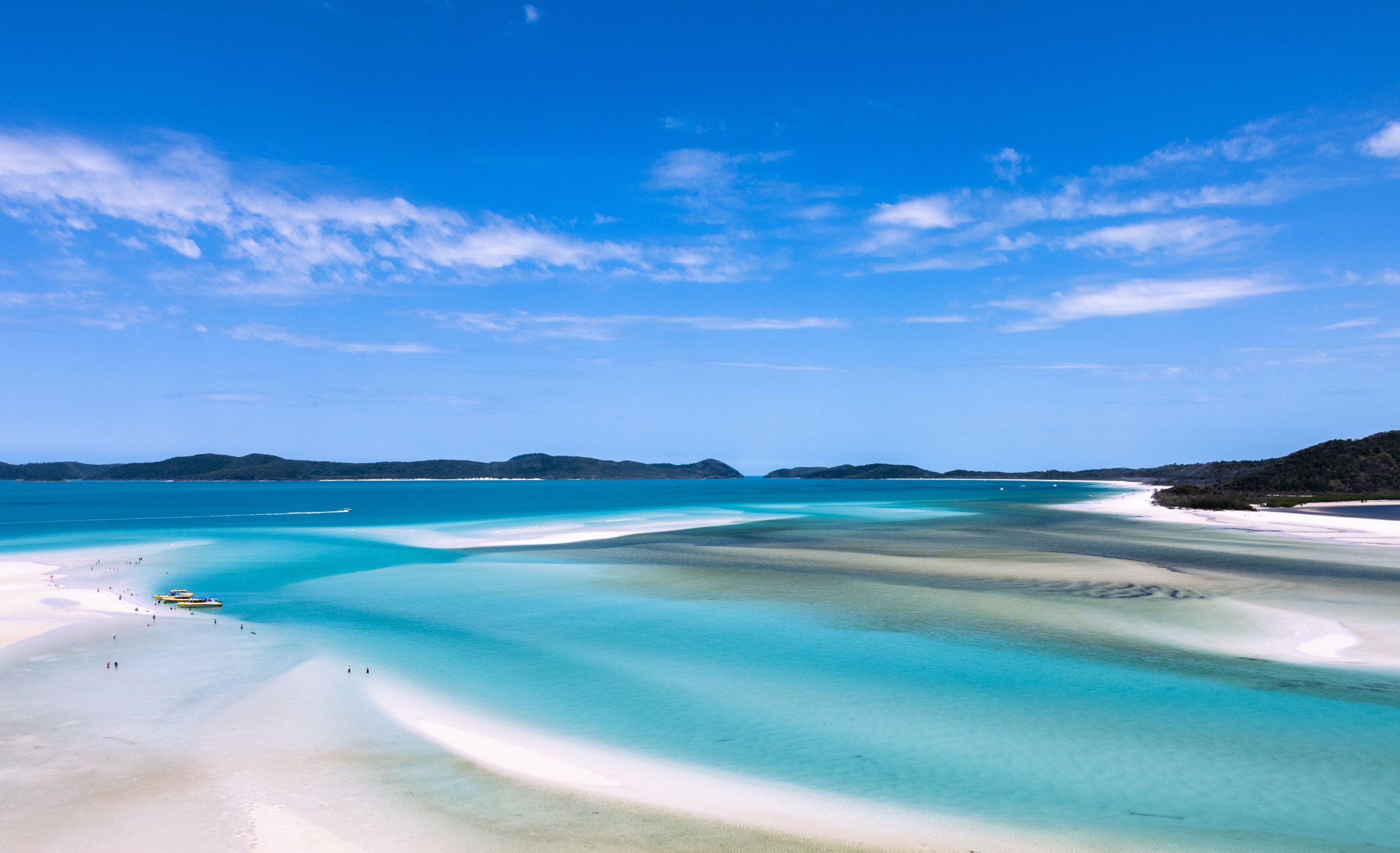
The classic first-wave spots are the north end of Bondi, Manly and Cronulla in Sydney, Wategos in Byron Bay, Currumbin Alley and First Point at Noosa in Queensland, and Torquay, Smiths Beach and Redgate in the south. There is almost no surf in Cairns or the Whitsundays: the Great Barrier Reef blocks the swell, so learn further south.
Take a lesson for your first sessions. Instructors pick the right beach for the day, give you a big soft-top board, and teach you the paddling and etiquette that keep you out of trouble. Two hours is usually enough to stand up on a small wave.
What are the unwritten rules of surfing in Australia?
Australian surf breaks have a strong local crew and a pecking order. The surfer closest to where the wave is breaking has priority, so never drop in on someone already riding. Wait your turn rather than paddling straight to the peak, keep hold of your board so it never hits anyone, and if you are a beginner, stay on the inside where the waves are small. A smile and a "g'day" go a long way.
Respect the ocean as much as the locals. On patrolled beaches, surf outside the red and yellow flags; many breaks are over sharp reef or rock, so wear a leash and fall flat. Never surf alone in big swells, avoid murky river mouths after heavy rain, and read our guide to ocean safety in Australia before your trip.
Facts checked October 2026. Surf levels and seasons are general guidance; conditions change daily, so always ask the lifesavers or local surf schools before you go in.