Few things in Australia beat watching a green turtle glide over the reef or a loggerhead haul herself up the sand at night. This guide covers the best places for turtle spotting in three states, what makes Australia's turtles special, and the simple rules that keep both you and them out of trouble.
What kind of sea turtles live in Australia?
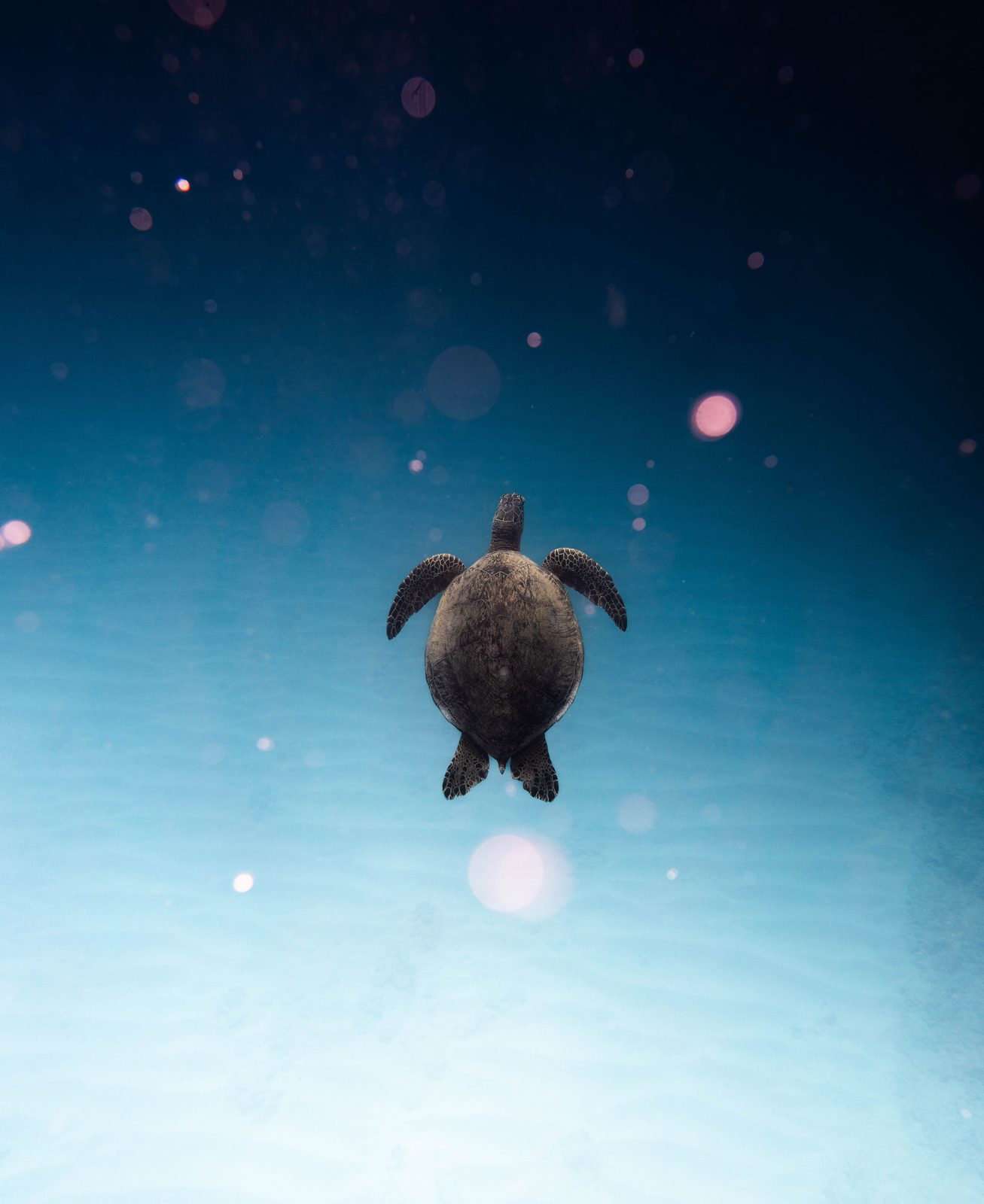
Six of the world's seven sea turtle species live in Australian waters: the green, loggerhead, hawksbill, flatback, leatherback and olive ridley. The one you are most likely to meet is the green turtle, which grazes on seagrass and algae on reefs and in shallow bays.
Adult green turtles can reach about a metre (3 ft) in shell length and well over 100 kg (220 lb). They grow slowly, take decades to mature and can live for many decades more.
| Species | Best place to see it | Federal status | How often you'll see one |
|---|---|---|---|
| Green turtle | Great Barrier Reef and Ningaloo | Vulnerable | Common on reefs and in some bays |
| Loggerhead turtle | Mon Repos, Bundaberg | Endangered | Common on nesting beaches in season |
All six species are protected under federal law and state wildlife laws, so the same respect applies on a busy reef pontoon or a remote stretch of coast.
Are Australia's sea turtles endangered?
Under Australia's national environment law, the loggerhead, leatherback and olive ridley are listed as endangered, and the green, hawksbill and flatback as vulnerable. Australia also has the world's only nesting populations of the flatback turtle.
The long-term effort is real. At Mon Repos near Bundaberg, a marine turtle research program has run every season since 1968, and volunteers have supported the park for more than 50 years. Mon Repos is the most significant loggerhead nesting site in the South Pacific region.
That work depends on protection continuing, which is why the viewing rules further down matter.
When is turtle nesting season in Australia?
Most nesting happens in the warmer months, and watching it is one of Australia's great wildlife moments. In Queensland, females come ashore from about November, and hatchlings emerge from January into March and April, depending on the beach.
At Mon Repos the beach is closed at night from 15 October to 31 May, except on ranger tours. At Ningaloo, nesting runs from December to early March, with hatchlings in February and March.
Where do Australia's green turtles nest?
Mostly far from where people go. Raine Island, a remote coral cay about 620 km north-west of Cairns on the outer Great Barrier Reef, is the world's largest known green turtle rookery. In summer, thousands of green turtles come ashore to nest there in a single season.
Raine Island is closed to visitors and is a sacred place for the Wuthathi People and the Meriam Nation (Ugar, Mer, Erub) People. Queensland's parks service is now working with the Australian Government and these Traditional Owners to restore the island as viable turtle nesting habitat for the long term.
A good deal of nesting also happens on the islands and beaches visitors can reach. Turtle season in Queensland runs from about November to March, sometimes into April, so keep beach lights and fires to a minimum during those months and never drive on beaches where turtles may nest. Tyres crush nests, and ruts can trap hatchlings.
Can you see flatback or hawksbill turtles in Australia?
Yes, with patience. The flatback nests only in Australia, on beaches across the tropical north of Queensland, the Northern Territory and Western Australia. It spends its life on the continental shelf rather than on coral reefs, so most visitors see it on nesting beaches rather than underwater.
You can tell a hawksbill by its narrow, pointed beak, which it uses to pick sponges and soft corals from the reef. On Lady Elliot Island, the dive team lists green, loggerhead and hawksbill turtles on its shallow Second Reef site. If you spot one, note the place and take a photo from a respectful distance.
Where is the best place to see sea turtles in Australia?
Green turtles live along most of Australia's tropical and subtropical coast, so you can see them on almost any healthy reef. These places are well known for turtles:
- Mon Repos, Queensland: The most famous turtle beach in Queensland, near Bundaberg. Loggerheads make up 95 per cent of nesting turtles here. From November to late March, rangers run small-group Turtle Encounter tours after dark from the Mon Repos Turtle Centre, and nights out on the beach are booked online. Tickets go fast, so book well ahead.
- Lady Elliot Island, Great Barrier Reef: A small coral cay at the reef's southern tip, where green turtles rest in beds of soft coral at Lighthouse Bommies and others tuck into the nooks of Maori Wrasse Bommie.
- Heron Island, Capricornia Cays: A turtle nesting island on the southern reef, where guests may see green turtle hatchlings between about December and April, and turtles nesting earlier in the summer.
- Ningaloo, Western Australia: On the coast near Exmouth in Western Australia, where the Jurabi Turtle Centre runs guided turtle eco-education tours from late November to March.
For more species and wildlife spots, see our Australia wildlife guide.
Can you snorkel with sea turtles in Australia?
Yes, and it is often the highlight of a trip. On the southern Great Barrier Reef, Lady Elliot and Heron islands both offer snorkelling straight off the beach, and green turtles are common sights on the reef flats and around the coral bommies.
Further north, outer reef day trips from Cairns and Port Douglas often meet turtles at moorings and cleaning stations, and at Ningaloo they cruise the lagoon at Turquoise Bay and Coral Bay just metres from the sand. Full site guides: Great Barrier Reef snorkelling and diving and Ningaloo snorkelling and diving.
Further south, turtles are occasional summer visitors rather than residents, and in Tasmania's cold water they are rare. Even so, there is plenty of marine life to find. See the full guides to Sydney and Tasmania snorkelling and diving.
A few habits make the encounter better for you and the turtle:
- Float, don't chase. Turtles come up to breathe. Never block a turtle's path to the surface or swim above it.
- Never surround or corner one. If you're in a group, stay on one side.
- Use your zoom. A wide-angle camera gets a great shot from 3 m (10 ft).
- Protect the reef. Wear a rash vest and don't stand on coral, which is home to the turtles' food.
How close can you get to a sea turtle in Australia?
Give turtles plenty of space, on land and in the water, and on nesting beaches follow the ranger or guide. At Mon Repos, visitors watch nesting and hatching only on ranger-led tours, and strict rules on light keep turtles from being disturbed or disoriented.
- Don't touch, feed, ride or chase a turtle, in the water or on the sand.
- Keep lights low: at Mon Repos, torches are capped at 100 lumens.
- No glow sticks or light-up shoes, and keep phones away.
- Never pick up a hatchling or carry it to the water.
Sea turtles are protected under federal and state laws, and harming or interfering with them can bring heavy fines. Bright lights are a big problem: they draw hatchlings away from the sea, which is why Queensland runs its Cut the Glow campaign.
In Queensland, report sick, injured or orphaned wildlife on 1300 ANIMAL (1300 264 625), and marine strandings on 1300 130 372 (option 1).
What should you do if you find an injured sea turtle?
In Queensland, call the marine strandings hotline: 1300 130 372, option 1. It covers sick, injured and stranded turtles, dolphins, dugongs and whales. Save the number in your phone before you hit the beach.
In Western Australia, contact DBCA's Wildcare Helpline or the nearest Parks and Wildlife office. If you hook a turtle while fishing, call for advice rather than hauling it in by the line, and never try to remove a swallowed hook yourself.
The main threats you might notice are:
- Fishing line and gear: Monofilament is especially dangerous. Pick up any you find.
- Plastics and marine debris: Turtles eat plastic and get tangled in nets.
- Light near beaches: Bright lights near the shore draw hatchlings away from the sea. Turn off or shield outdoor lights near beaches in nesting season.
Want to go deeper? Our upcoming book, Discover Sea Turtles, covers green turtles, loggerheads and where to watch them responsibly.
Facts checked October 2026. Listing status, nesting seasons, visitor rules and hotline numbers come from the Australian Government, Queensland Parks and Wildlife Service and WA's DBCA; rules can change, so check posted signs and official sources before you go.
- Australian Government DCCEEW: Marine turtles in Australia
- Queensland Parks: Mon Repos Conservation Park
- Queensland Parks: About Mon Repos and turtle season rules
- Queensland Parks: Visiting Mon Repos safely, torch and photography rules
- Queensland Parks: Raine Island National Park
- Queensland Parks: Capricornia Cays National Park
- WA Parks and Wildlife: Jurabi Turtle Centre
- WA Parks and Wildlife: Ningaloo Marine Park